Picking a tire
Two spots, and you already own both of them:
On the tire sidewall
Check the side of any tire on your car: the size is printed right into the rubber.
On the driver's door jamb
Open the driver's door and look at the sticker on the body frame.
If the two disagree, look at the wheel size (the "R17" part, the last two digits). Same wheel size? Trust the door-jamb placard. That's the factory size. Different wheel size? A previous owner put aftermarket wheels on the car, so trust what's actually on the tire today.
Got the numbers? Type them right here:
Two questions, one answer. The tire industry sells thousands of tires under dozens of brand names and somehow expects you to have opinions about all of them. That's a cruel prank.
Here's the truth most tire companies won't tell you: a tire's logo tells you almost nothing. Some brands quietly build excellent tires. Others spend their money on glossy commercials. After seeing 100,000+ tires in person over decades in this business, we know which is which.
So we did the comparing already and boiled the whole catalog down to just 3 curated tiers. The brand curation is our problem to worry about; the easy choice is yours. Every tire we sell is one we'd happily bolt onto our own family's car.
Think of it as steps up the same ladder. The 3-Year is a solid, no-drama tire, perfect if you mostly drive to work and back. The 5-Year steps it up with better traction and a noticeably longer life. The 5-Year Premium is the top shelf. But here's the part most tire sites won't explain: "Premium" isn't about lasting even longer. It's about the rubber itself being better. Premium compounds keep their grip and their quiet ride as the tire wears down, instead of slowly turning into a loud, slippery version of their former self. A worn premium tire still drives like a good tire. That's what you're paying for.
Sometimes you'll see a 4-Year Premium instead. That's not a typo and not a downgrade. On lower-profile tires (the kind that come on a lot of performance and luxury cars), the manufacturers deliberately prioritize traction and quietness over longevity. Getting that grip requires a softer rubber compound, and softer rubber wears a little faster. So the best tire made for those sizes is honestly a 4-year tire, and we'd rather tell you that than pretend otherwise.
One thing to be clear about: the tier names are descriptions, not warranties. They're our shorthand for how long each tire is built to last for an average driver. Every tire still comes with its own manufacturer's mileage warranty, separate from the tier name: if a tire fails inside that warranty, the manufacturer stands behind it. All our tiers are well known national brands with full manufacturer mileage warranties, curated by our years of experience; you're just choosing how much grip and quiet you want, and for how long.
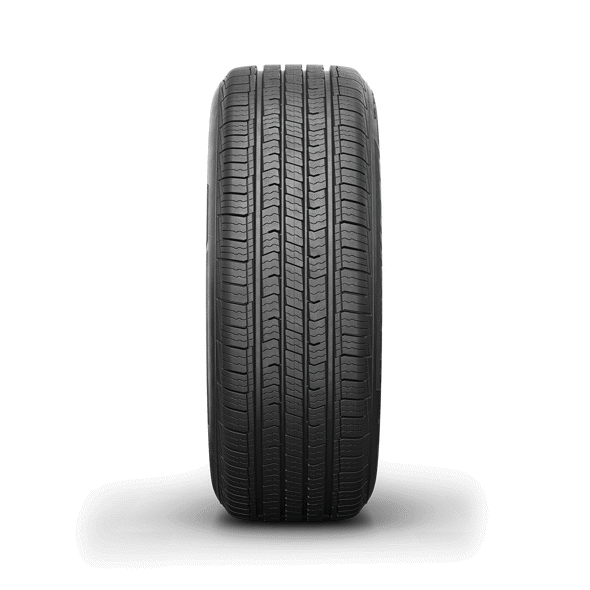
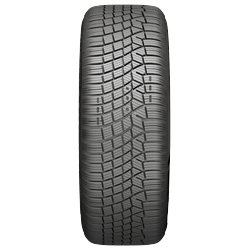
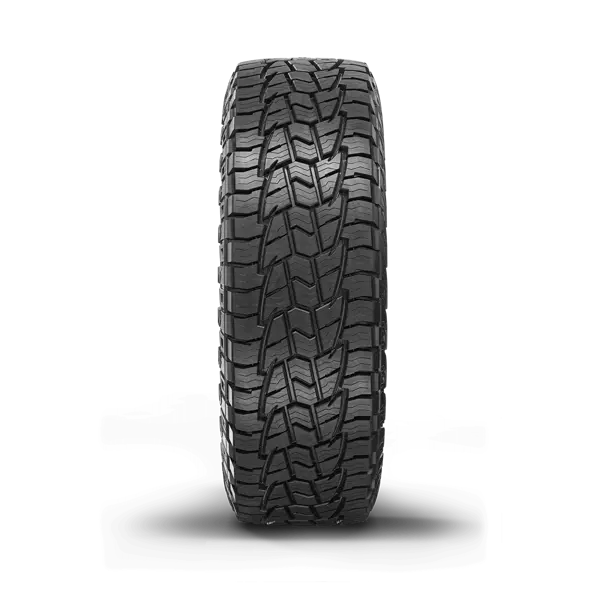
The quick version: All Season for everyday roads, All Weather for real winters, All Terrain for dirt and gravel.
All Season: quiet, smooth, easy on fuel, grippy in rain and light snow. What most cars want. If your "off-road" is a bumpy parking lot, this is you.
All Weather: an All Season that packed a coat. Same on-road manners, but stays grippy through cold, slush and real snow (many earn the mountain-snowflake winter badge). For proper winters, minus the fuss of dedicated snow tires.
All Terrain: for trucks and SUVs that leave the pavement. Beefier tread and tougher sidewalls for gravel, dirt, mud and deeper snow. Costs a little road noise, fuel and pavement wear, so it's overkill on-road.
You barely choose. Enter your ZIP and we check national weather data: cold, snowy areas automatically get the All Weather version of any tier that offers one in your size (the rest stay All Season); mild areas see All Season. All Terrain is the only pick left to you. It's mostly truck and SUV sizes, so if yours qualifies, a chooser appears above the cards.
Yes and yes. The tires we choose for each tier are well-known, top-of-tier national brands. Every tire is brand-new, DOT-approved and fully road-legal. No seconds, no used tires, nothing we wouldn't put on our own cars. The only thing we don't market is the brand; we never compromise on quality.
Know before you own
Three things, all of them avoidable, all of them boring.
1. Skipping rotations. Tires need to swap positions about every 6,000 miles so they wear evenly. Keep the receipts or service records; that paper trail is what the manufacturer asks for if you ever file a claim.
2. Bad alignment. When your car's alignment is off, every mile you drive scrubs the tires sideways. It shaves years off their life shockingly fast.
3. Worn or loose suspension parts. Tired shocks, struts, ball joints, or bushings make your tires wear in distinctive, uneven patterns, the kind a tire shop can spot from across the room.
When you file a warranty claim, the manufacturer inspects the tire and reads the wear pattern. Unusual wear = warranty voided, no exceptions. The good news: rotations on time, alignment in spec, suspension in shape. That is all it takes to keep the warranty alive.
Any tire shop or most mechanics can mount and balance them; it usually runs about $20–30 per tire and takes under an hour. We are a website, and despite genuine enthusiasm we cannot come to your driveway with a jack. Drop your new tires at the shop of your choice and you're set.
While you're there, ask about an alignment. If your old tires wore unevenly or the car pulls to one side, the answer's yes. Your installer will take one look and tell you. It's not something you buy from us; we just make the round black part excellent.
Ordering
Right now, shipping is on us: no minimums, no asterisks. Your tires ship from our nationwide warehouse network and usually arrive in 2–4 business days. You'll get tracking, so you can watch the little truck icon inch heroically across the map toward your house.
Yep. Most people replace all four at once because it's better for the car, but you can order any quantity from one to twelve right in the cart. Pairing one shiny new tire with three bald ones is a choice, just not a great one.
Yes, and you don't have to sign up for anything ahead of time. When you get to checkout, the payment box automatically shows Affirm and Klarna alongside card, Apple Pay and Google Pay. Pick one, answer a couple of quick questions, and you can split your tires into 4 payments (or longer monthly plans, depending on which one you choose and the order size).
It's a soft credit check: no impact on your credit score just for checking if you qualify. We don't see any of your financial info; that part stays between you and Affirm or Klarna. From our side, your tires ship out the same day either way.
Why offer it? Because a set of four tires can be an unplanned hit to the budget, and going broke for the privilege of safe driving is dumb. If splitting it into four payments makes the difference between "I'll just drive on these bald ones for another month" and "fine, new tires," we'd rather you have the new tires.
Returns & warranty claims
Three flavors of this, all easy. Email support@stupidtires.com with your order number and a quick note about which one applies:
Hasn't shipped yet? If the order's still at the warehouse, we cancel and refund you in full, on the spot.
Shipped but unmounted, within 30 days? Full refund: no restocking fees, no weird forms, no judgment. Return shipping is on you. Tires are heavy, and "free returns for everyone" would mean baking that cost into everyone's tire price, the opposite of the stupid-simple deal we're trying to offer.
Wrong size? Same deal: return shipping on you, since we shipped exactly what you ordered. Definitely double-check those three little numbers before checkout.
Once a tire has been driven on, though, it's yours forever. Tire shops can spot a mounted tire from across the room, and once one has touched a wheel, nobody can resell it.
Don't mount them. Take a few photos and email support@stupidtires.com.
Damaged in shipping (crushed box, sidewall scrape): report within 7 days. We'll ship a replacement and handle the carrier claim ourselves. You don't have to argue with FedEx, UPS, or a slowly-melting chatbot.
Defective from the factory (a bubble, a bad sidewall): report within 30 days. Same deal: replacement at no cost to you, including the return shipping for the bad one.
Oh boy, sorry that happened. Email support@stupidtires.com with a few photos of the tire (the failure spot, the sidewall, and the tread) and a quick note about what happened. We'll take a look and walk you through the next steps; every situation is a little different, so we'd rather see it before sending you down the wrong path.